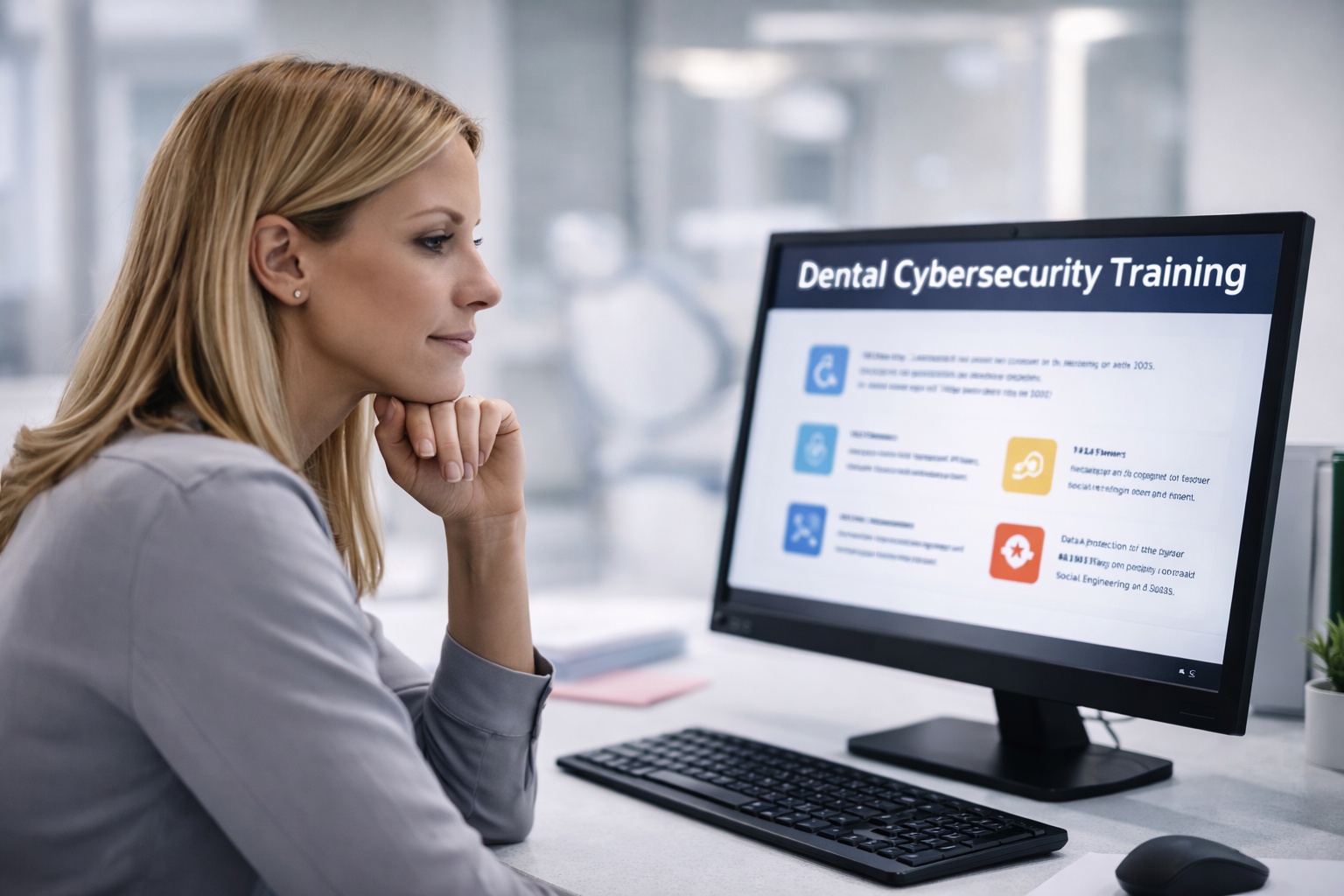

Dental Cybersecurity Training: What to Look for Before You Buy
Mar 22, 2026Not all dental cybersecurity training is created equal.
Some programs check a box. Others actually reduce risk. The difference comes down to whether the training reflects how dental teams really work—and whether your team can apply what they learn the very next day.
If you’re evaluating training, here’s what to look for before you buy.
Why dental cybersecurity training is different
Dental practices are not generic offices. Your team handles patient data, insurance information, attachments, financial transactions, and constant communication throughout the day.
That creates a unique risk profile:
- fast-paced environment
- high volume of emails and attachments
- multiple systems and logins
- shared workflows across team members
Generic training doesn’t account for this. Dental-specific training does.
What effective dental cybersecurity training should include
Real-world dental scenarios
Your team should see examples that reflect their daily work:
- fake invoices from labs or suppliers
- suspicious emails related to patient scheduling
- vendor impersonation
- internal-looking messages that aren’t
If the examples feel generic, your team won’t connect them to real risk.
Phishing and social engineering training
This is the number one risk area.
Training should teach your team how to:
- recognize suspicious emails
- pause before clicking
- verify unusual requests
- avoid urgency traps
Privacy and data handling
Cybersecurity and privacy go together.
Your team should understand:
- how patient data can be exposed
- when not to send information by email
- how small actions can lead to large breaches
AI awareness
Your team is already experimenting with AI tools.
Training should include:
- what not to enter into AI systems
- how to verify AI-generated content
- where privacy risks exist
If AI isn’t included, the training is outdated.
Practical, short modules
If training is too long or too technical, people disengage.
Look for:
- short modules
- simple explanations
- practical examples
- clear takeaways
Regular reinforcement
One-time training is not enough.
Effective programs include:
- refreshers
- updated content
- ongoing awareness
Documentation and proof
You need:
- completion tracking
- certificates
- proof for compliance or insurance
If it’s not documented, it’s hard to prove it happened.
What to avoid
Watch for training that is:
- generic (not dental-specific)
- overly technical
- long and hard to complete
- outdated (no AI coverage)
- one-time only
- not tracked or documented
If your team won’t finish it or remember it, it won’t protect you.
Questions to ask before choosing a provider
Before you commit, ask:
- Is this training designed specifically for dental teams?
- Does it include real-world scenarios we recognize?
- Does it cover phishing, privacy, and AI?
- Is it short enough for our team to complete?
- Do we get documentation of completion?
- How often is the content updated?
If you can’t get clear answers, keep looking.
What good training should do
At the end of training, your team should be able to:
- recognize suspicious messages
- avoid common mistakes
- handle patient data more safely
- follow clear rules for technology use
- report issues quickly
That’s what actually reduces risk.
FAQ
Is dental cybersecurity training required?
Requirements vary, but many insurers and regulatory expectations increasingly expect documented training.
How often should training be updated?
At least annually, with refreshers throughout the year.
Can we use general cybersecurity training instead?
You can—but it won’t address dental-specific workflows and risks.
Does training really reduce risk?
Yes, when it is practical, relevant, and reinforced over time.
About Myla Training
Myla Training provides dental-specific cybersecurity, privacy, and AI training designed for real teams in real practices. The focus is practical risk reduction, clear guidance, and training people will actually complete.
Learn More. Be Safe.
Train your team today. Get documented cybersecurity training, a completion certificate for compliance, and proof insurers increasingly expect to see. Because hope is not a security strategy.
Learn More. Be Safe.
Train Your Team to Spot AI Risks Today