Human Risk in the Age of AI: What Dental Teams Need to Know
Jun 17, 2026Cyber criminals are using AI against us.
A patient calls the office. They sound rushed. They say they received a message about an overdue balance and clicked the payment link. Now they are worried it was fake.
A team member receives an email that looks like it came from the dentist. It asks for a quick change to payroll information. The wording is perfect. The signature looks right. There are no spelling mistakes. Nothing feels obviously wrong.
Then the phone rings. The voice sounds familiar.
This is the new human risk in the age of AI. It is not about people being careless. It is about scams becoming more believable, more personalized, and much harder to spot at normal office speed.
For dental practices, this matters because trust is everywhere: in patient communication, payment requests, insurance forms, supplier invoices, team scheduling, records access, and clinical workflow. AI does not remove the human element from cybersecurity. It puts the human element under more pressure.
What is AI, in plain language?
Artificial intelligence, or AI, refers to computer systems that can perform tasks that usually require human intelligence, such as recognizing patterns, translating language, generating text, summarizing information, or identifying likely answers. Generative AI is the type many people now use through tools that can create new text, images, audio, video, or code.
That means AI can help ordinary people write faster, summarize long documents, create training materials, improve accessibility, and organize information. Used well, it can be extremely useful.
But the same capabilities can also be misused. AI can help a criminal write a convincing phishing email. It can create a fake invoice. It can imitate a tone of voice. It can summarize stolen data quickly. It can remove the old clues we used to rely on, such as poor grammar, awkward wording, or strange formatting.
In other words, AI changes the old security advice from “look for obvious mistakes” to “slow down and verify the request.”
Why human risk is changing
Human risk is the risk created when people are pressured, tricked, rushed, confused, overloaded, or given unclear processes. In dental practices, that can happen during a busy morning, a patient emergency, a staffing gap, or a full schedule that leaves no room for careful review.
AI makes that risk more intense for three reasons.
1. Scams can look and sound more real
Generative AI can produce polished messages, realistic images, and increasingly convincing audio or video. The UK National Cyber Security Centre has assessed that AI will increase the volume and impact of cyber attacks, with the biggest near-term boost in reconnaissance and social engineering. It also warns that generative AI can make phishing harder to identify because messages no longer contain the spelling and grammar mistakes people were trained to notice. [2]
That is a major shift. Many dental teams were taught to look for typos, odd phrasing, and suspicious logos. Those signs still matter, but they are no longer enough.
2. Attacks can be more personal
AI can help attackers turn public information into targeted messages. A website bio, LinkedIn post, online review, conference photo, or team page can help a scammer write something that feels familiar. A fake message may mention a real supplier, a real dentist, a real continuing education event, or a real patient communication workflow.
The danger is not that every scam will be brilliant. The danger is that more scams will be “good enough” to interrupt a busy person at the wrong moment.
3. People may over-trust AI output
AI can sound confident even when it is wrong. NIST’s Generative AI Profile describes “confabulation” as the production of confidently stated but false or erroneous content. It also identifies data privacy, information integrity, and information security as risks that can be created or intensified by generative AI. [1]
That matters in healthcare settings because patient information, payment details, clinical records, and business decisions all require accuracy and care. AI can assist, but it should not become the final authority for sensitive decisions.
What this means for dental practices
Dental teams handle sensitive information all day. Even when the practice is small, the data is not small. Patient names, birth dates, health histories, treatment plans, insurance information, payment details, and appointment patterns can all be valuable to criminals.
AI-related human risk can show up in practical ways:
- A fake patient message asking the team to open an attachment.
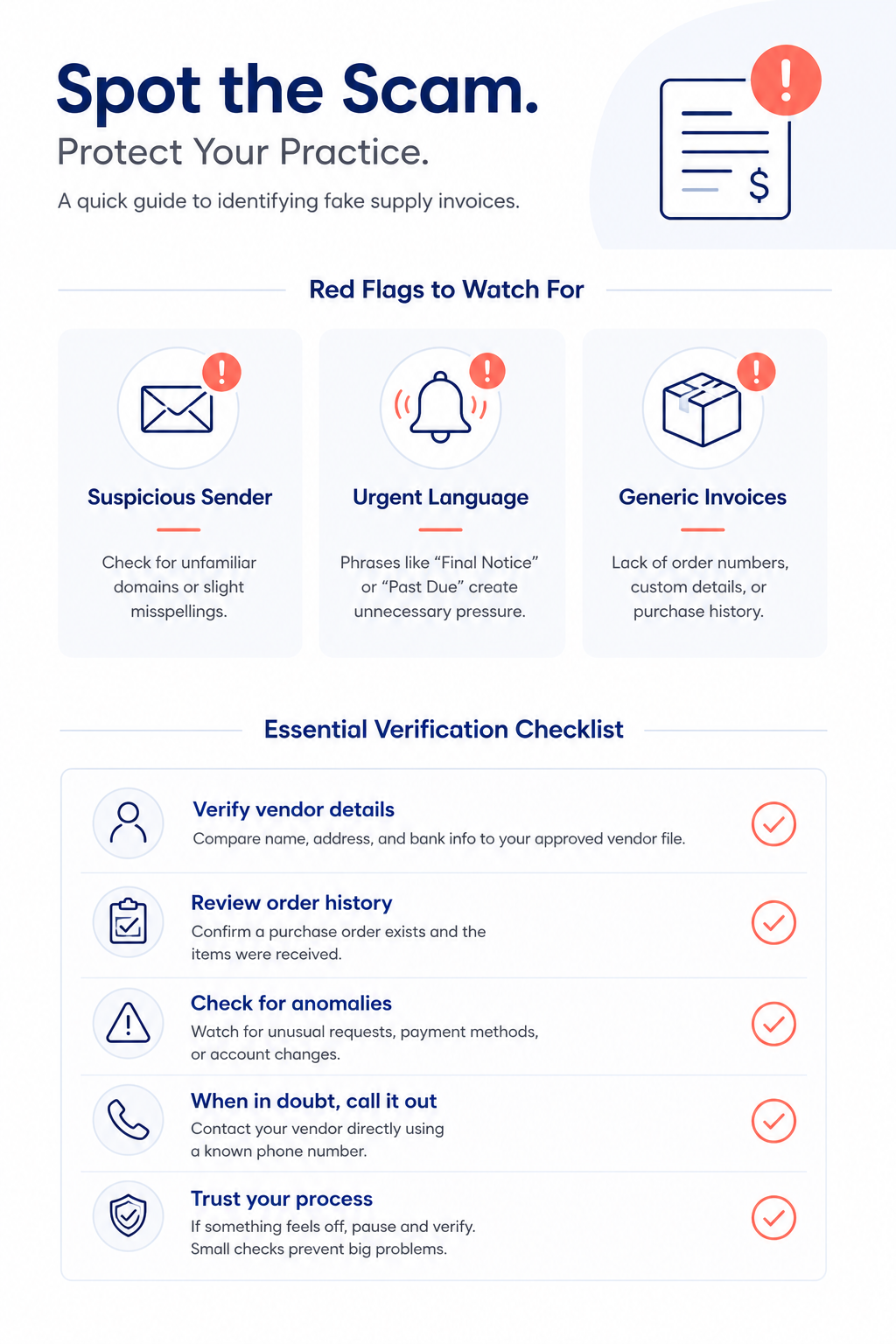
- A fake supplier invoice with accurate-looking branding.
- A fake message from the dentist asking for gift cards, payroll changes, or urgent payment.
- A voice message that sounds like someone the team knows.
- A team member pasting patient information into an AI tool without knowing where that data goes.
- An AI-generated summary that sounds accurate but misses important context.
None of these examples require a dramatic Hollywood hacker. Most require only a normal workday, a believable message, and a rushed decision. Cybersecurity: now with fewer hoodies and more calendar invites.
The new rule: trust the relationship, verify the request
In the age of AI, the safest dental teams do not rely on instinct alone. They rely on agreed verification habits.
A good verification habit is simple, repeatable, and allowed by leadership. Team members should know they are expected to pause when something feels urgent, unusual, financial, confidential, or outside normal procedure.
Use a separate channel to confirm sensitive requests. If an email asks for a payment change, do not reply to that email. Call the known phone number already on file. If a text asks for credentials, do not use the link. Go directly to the system. If a voice message sounds urgent, confirm through another known method.
The goal is not to make the team suspicious of everyone. The goal is to make verification normal. A pause is not a lack of service. It is part of protecting patients.
A practical checklist for dental teams
1. Create a “pause and verify” rule
Any request involving money, passwords, patient records, payroll, banking, insurance access, or unusual urgency should trigger verification through a trusted channel.
2. Train for modern phishing, not old phishing
Training should include polished phishing messages, AI-written emails, fake invoices, QR-code scams, voice-based scams, and impersonation attempts. Dental security awareness training should reflect what teams actually see in the operatory, at reception, and in the manager’s office.
3. Set clear rules for AI tools
Decide what team members may and may not enter into AI tools. As a default, patient-identifiable information should not be pasted into public AI systems unless the practice has completed appropriate privacy, security, legal, and vendor review.
4. Reduce reliance on memory
Use written procedures for payment changes, supplier updates, patient record requests, device approvals, and access to practice systems. A checklist beats a heroic guess, especially before coffee.
5. Use multi-factor authentication
Where available, protect email, cloud systems, practice management software, remote access, payroll, banking, and administrator accounts with strong multi-factor authentication. MFA does not solve every problem, but it makes stolen passwords less useful.
6. Encourage reporting without blame
If someone clicks, replies, or feels unsure, they should be able to report quickly without embarrassment. Fast reporting can reduce harm. Shame slows people down. Calm response protects the practice.
The real message: people are not the weakest link
You may have heard that humans are the weakest link in cybersecurity. That phrase is catchy, but it is also incomplete.
Humans click links. Humans also notice strange patterns. Humans ask smart questions. Humans protect patients. Humans stop fraud when they are trained, supported, and allowed to pause.
AI raises the stakes because it can make deception smoother. But it also makes human judgment more important, not less. In a dental practice, the strongest defense is a trained team with clear procedures and permission to verify.

FAQ
Is AI bad for dental practices?
No. AI can be useful for administration, education, communication, and workflow support. The risk comes from using it without privacy, cybersecurity, accuracy, and human oversight safeguards.
What is the biggest AI-related cybersecurity risk for dental teams right now?
The most practical near-term risk is more convincing social engineering: phishing emails, fake invoices, impersonation, voice scams, and messages that pressure people to act quickly.
Can AI-generated phishing still have warning signs?
Yes, but the signs may be subtler. Instead of relying only on spelling mistakes, look for urgency, unusual payment requests, unexpected links, requests for credentials, confidentiality pressure, or a change from normal procedure.
Should dental teams use AI with patient information?
Not casually. Patient information should only be used with tools and workflows that have been reviewed for privacy, security, contractual safeguards, and legal/regulatory requirements that apply to the practice.
What should a dental practice do first?
Start with a simple team rule: verify sensitive requests through a trusted channel before acting. Then update training, AI-use rules, MFA, and reporting procedures.
Summary
AI is changing the shape of human risk. It is making some scams faster, cleaner, and harder to recognize. But the answer is not panic. The answer is preparation.
For dental practices, that means clear rules, practical training, privacy-aware AI use, and a culture where team members are encouraged to pause before they click, pay, share, or approve.
Learn More. Worry Less. Stay Safe.™
Train Your Team to Spot AI Risks Today